Who we are
Introducing the founding trustees:
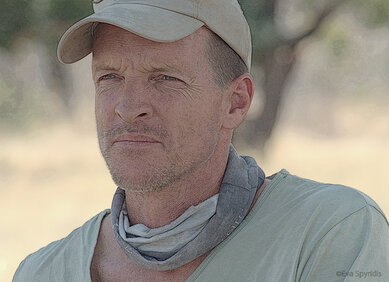
Arthur Albertson Sandi Albertson
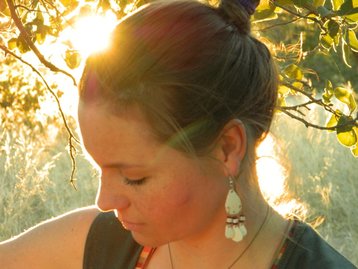
Arthur Albertson Sandi Albertson
|
|
Husband and wife team Arthur and Sandi are based in Maun, Northern Botswana, where in addition to managing Kalahari Wildlands Trust (KWT), they also manage an environmental consulting company specializing in land use planning, community based resource management and tourism. Under her Wild Artefacts initiative, Sandi is also responsible for community based arts and crafts development. Much of their work experience relates to the Central Kalahari Game Reserve, Western Ngamiland and other remote community areas. Their in-depth knowledge and working experience related to these semi-arid regions of Botswana is unique.
Arthur's conservation work dates back to 1996 when he first moved to Botswana. His mostly voluntary efforts were instrumental to unpublicized decisions by the Botswana Government to remove a total of 258 kilometers of veterinary fencing cutting across wildlife migration routes in Northern Botswana between 1998 and 2008 - action which saved the lives of probably thousands of wild animals.
In South Africa, dating back to 2006, he has worked closely with legal teams - also voluntarily - to halt the encroachment of luxury residential estate developments onto Johannesburg's largest remaining mountain ridge ecosystem - home to fast disappearing wildlife such as the endangered Mountain reedbuck and a critically endangered orchid species (Brachycorythis conica spp. transvaalensis) He is a longstanding committee member of the Black Eagle Project Roodekrans and a co-founder of the Proteadal Conservation Association.
Since 2009, Arthur and Sandi have worked as a close team in support of remote rural communities, donating much personal time and resources towards their upliftment and efforts to conserve their natural and cultural heritage.
The KWT was formed in 2016 as a means of expanding and properly resourcing Arthur and Sandi's voluntary conservation efforts, and to put to good use decades of accumulated consulting-related and voluntary working experience related to the Kalahari ecosystems and communities.
A primary motivating factor for the formation of the KWT is the need to conserve and rehabilitate habitat for free-ranging wildlife - especially in areas located outside of Botswana's protected area network - and to support the most needy rural communities in these areas in their efforts to conserve their natural / cultural heritage and to develop sustainable livelihoods for themselves.
While much attention and resourcing has to date been focused on the well-known, relatively safe formally protected areas in Botswana, very little is being done to address the progressive loss of wildlife habitat that is taking place in the surrounding Wildlife Management Areas and communal grazing lands: Comprising the larger proportion of the wildlife dispersal areas, it is what is happening to these largely ignored unprotected habitat areas (58% of total current wildlife dispersal area) which is likely to be the ultimate deciding factor on the future of Botswana's wildlife, its tourism industry, and its Community Based Natural Resource Management (CBNRM) programme.
Please support our work by making a donation.
All images © Arthur Albertson and Kalahari Wildlands Trust (2016 to 2022)